
Smart Chefs Impulse Event
The Smart Chefs event brings together culinary professionals to share sustainable practices.
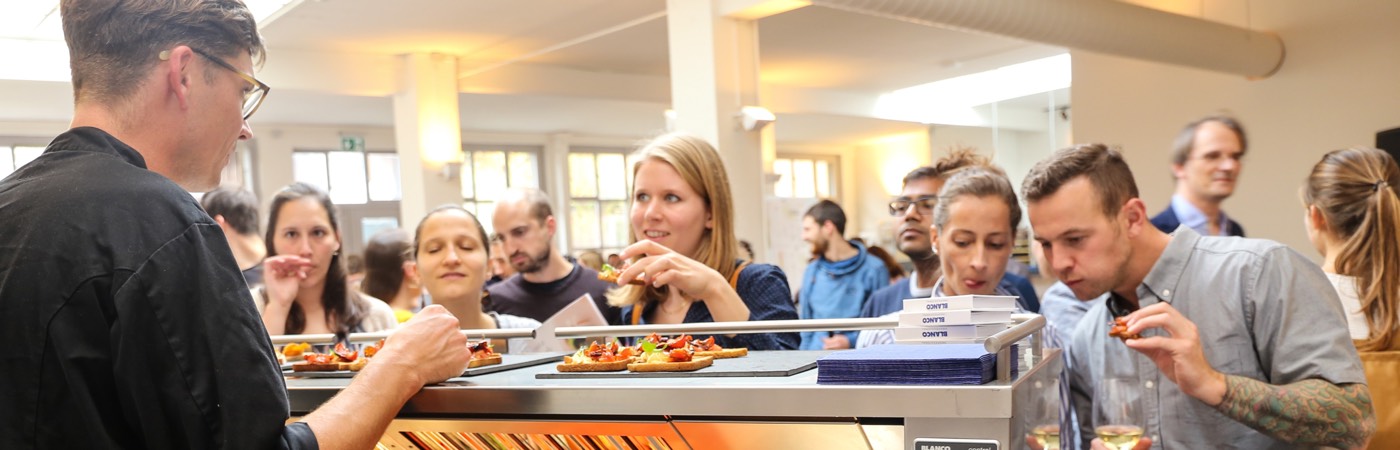
On 28 September 2017, we informed about our latest findings in the fields of climate protection, health and environmentally friendly agriculture in an interactive impulse event. At the event we were able to share our 2 greatest loves with you. What unites us at Eaternity is good food and solid data. We bring together two worlds that should not be separated: science and gastronomy.
On site, you could taste 3 healthy, climate and environmentally friendly aperitifs as well as their counterparts, provided by our 3 chefs: Andi Handke, Marco Geisser and Samuel Stoll.
The consumption and trend researcher Mirjam Hauser gave us an exciting outlook on our eating behavior in 2030. So there were digital hopes and the desire for more responsibility, but reality was not neglected either, so you could get a taste of what's to come directly at the event.
With a quiz and stimulating panel discussions, the knowledge was comfortably digested. The good news: The change to more sustainability in our eating behavior is easier to implement than thought, it reduces the emission of harmful greenhouse gases into the Earth's atmosphere and also offers real added value for our health.
Especially gastronomy plays an important role and can make a great contribution to help us become healthier and more environmentally friendly. If everyone in Switzerland ate climate-friendly 3 times a week, we would have the same impact as 750,000 fewer cars on the road.
Continuing with the «Eaternity Awards»
Important announcement at the event: Based on our study results, there will be
the awarding of the first <
The Smart-Chef Pioneers
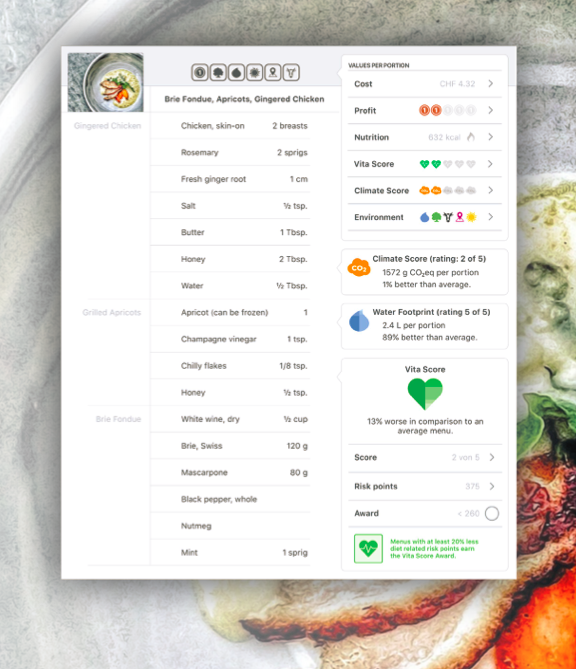
Following the goals: "healthier", "climate-friendly" and "good for the environment", 3 chefs demonstrated their craft at the cooking stations provided to us by Blanco Professional at the event. For the exact environmental and health assessment of the aperitifs and to get an outlook on the possibilities of the future Eaternity App, you can download the menus for a preview:
Climate Theme: Chef Samuel Stoll
Pumpkin-Lemon Antipasti with roasted almonds and sage. With Parmesan pickles. - Good for the climate - Local, seasonal, crisp.
-
Local and seasonal pumpkin and celeriac are delicious and have a top climate balance. They were produced in the open field and don't need a heated greenhouse
-
None of the ingredients were imported by plane
-
Small amounts of cheese are climate-friendly. In principle: the more plant-based the better.
[Mango-Water Chestnut Salad with Chili and Coriander. With sautéed prawns. - Climate-damaging][klima-bad] - Exotic, flown in, farmed prawns.
-
The mango and fresh herbs were flown in and therefore cause high CO₂ emissions.
-
Farmed prawns cause large CO₂ emissions. Above all, the feed production contributes to the large footprint.
-
The chestnut comes by ship and thus hardly contributes to the climate balance.
Health Theme: Chef Marco Gaisser
The Art of Pumpkin - Healthy - Lots of vegetables, a spicy whole grain cracker and pumpkin seeds support a diet that reduces the risk of diseases.
-
The pumpkin and mushrooms provide a large vegetable portion. The cracker was made from whole grain flour.
-
Pumpkin seeds ensure that there are enough nuts and seeds in the menu.
-
It's good that only small amounts of salt and no processed meat were used.
[Ciabatta Cracker with Beef Tenderloin Carpaccio - Problematic][health-bad] - White instead of whole grain bread, little vegetables and nuts as well as red meat contribute to a lifestyle that increases the risk of lifestyle diseases.
-
The ciabatta was made from white flour and contains no whole grain flour. Generally, there are only few vegetables, nuts and fruits included.
-
Red meat should only be enjoyed in small amounts.
-
The snack contains more salt than recommended.
Organic Theme: Chef Andi Handke
Slow Grow Root Vegetables on Community Bread, with Alpine Butter from Breitenboden - Good for the Environment - Local, seasonal, Alpine butter produced with high animal welfare standards, wheat from controlled production.
-
Local and seasonal root vegetables are delicious and an excellent choice for the environment and health.
-
The Alpine butter stands for animal-friendly husbandry, as the animals spend a lot of time on the high pasture. No valuable forest was cleared.
-
By buying organic products, you advocate for a long-term sustainable agriculture.
-
The community bread uses wheat with controlled origin and thus guarantees good cultivation methods.
[Toast with Tomatoes, African Herbs and Margarine - Less Good for the Environment][bio-bad] - Good for the climate but tomatoes from Spain and peanuts consume scarce water and non-certified margarine with palm oil causes deforestation of tropical forests.
-
The margarine contains non-certified palm oil and threatens our still existing rainforests.
-
The consumption of scarce water is increased but in the acceptable range. The irrigation of peanuts consumes the most scarce water, as they are mostly grown in dry areas.
-
In winter we have a target conflict for tomatoes: Spanish tomatoes are better for the climate but consume more scarce water than Swiss tomatoes.
Study Results
Relying solely on organic products to save the climate falls short, as this production method hardly results in an effective CO₂ reduction. For a meaningful overall assessment, the inclusion of other factors such as animal welfare, forest clearing, cultivation method and water resources is relevant. In addition to the climate impact, synergies can now be actively pursued between climate, water scarcity, animal welfare and tropical forest protection. The results of the study can be found here.
Through unhealthy nutrition, we lose a total of 229 million life years worldwide. In our society, besides malnutrition, our wrong eating habits that lead to diseases such as obesity, diabetes, cardiovascular problems and cancer are the burning issue. With the "Vita Score" developed by Eaternity, you can counteract this risk. This builds directly on the results of the Global Burden of Disease Project and their nutrition-related risk factors and translates these for simple recipe composition.
The research project was made possible by Engagement Migros, the funding fund of the Migros Group.
Downloads
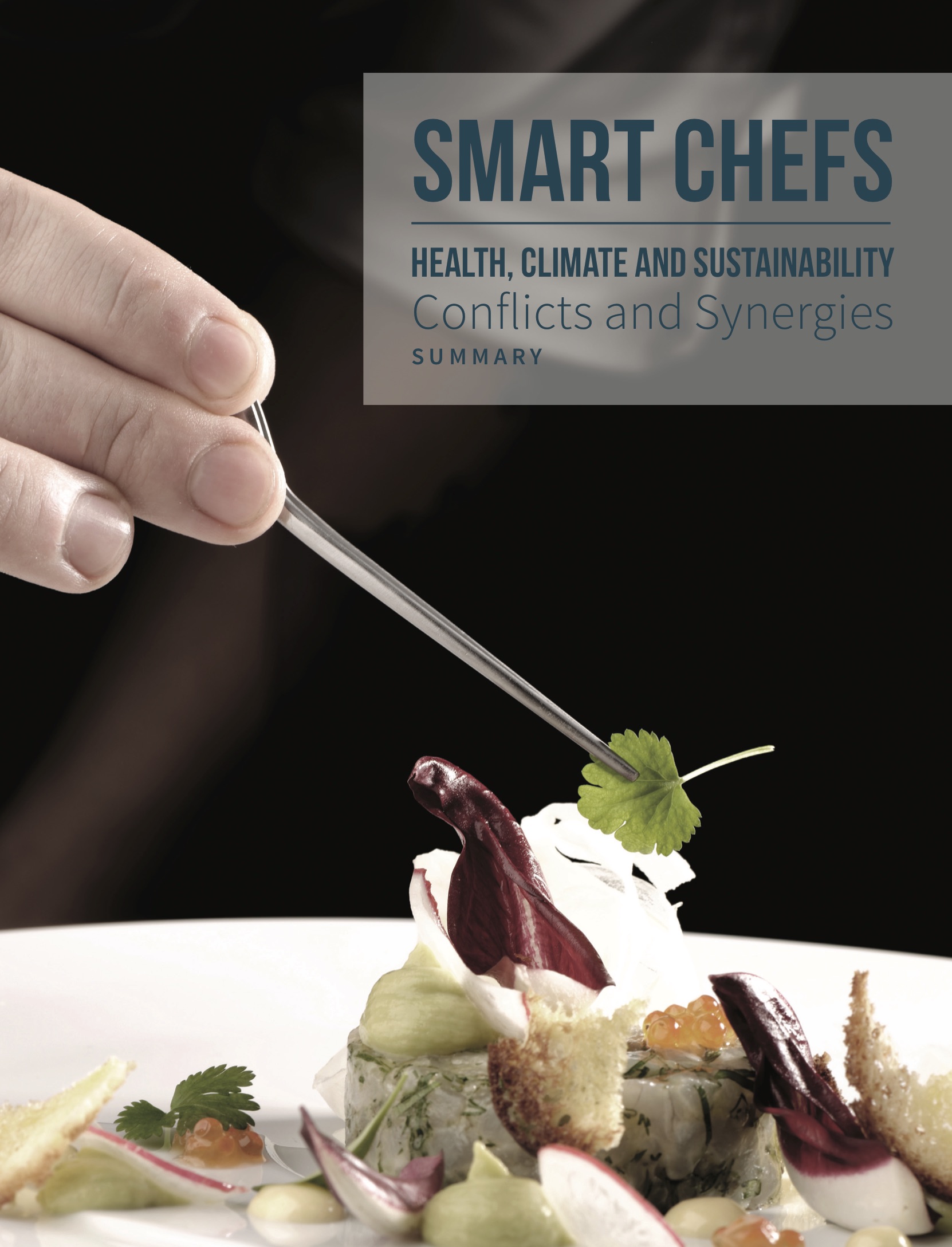
The results on health, organic and climate are summarized in the publication 2017-12-16-Smart-Chefs-Compilation.pdf.
Press release for the event: 2017-10-05_Eaternity-Medienmitteilung-Versand.pdf
Ready to Transform Your Food Impact?
Discover how Eaternity can help your organization achieve sustainability goals.
Get Started