
Vita Score: A Health Indicator for Foods Based on Scientific Evidence
The Vita Score supports the goal of staying healthy by promoting a diet that minimizes food related disease risk such as cardiovascular disorders, diabetes and cancer. Based on the Global Burden of Disease Study, it provides a scientifically grounded health indicator for meals.
Vita Score
A Health Indicator for Foods Based on Scientific Evidence
We Just Love a Healthy Diet
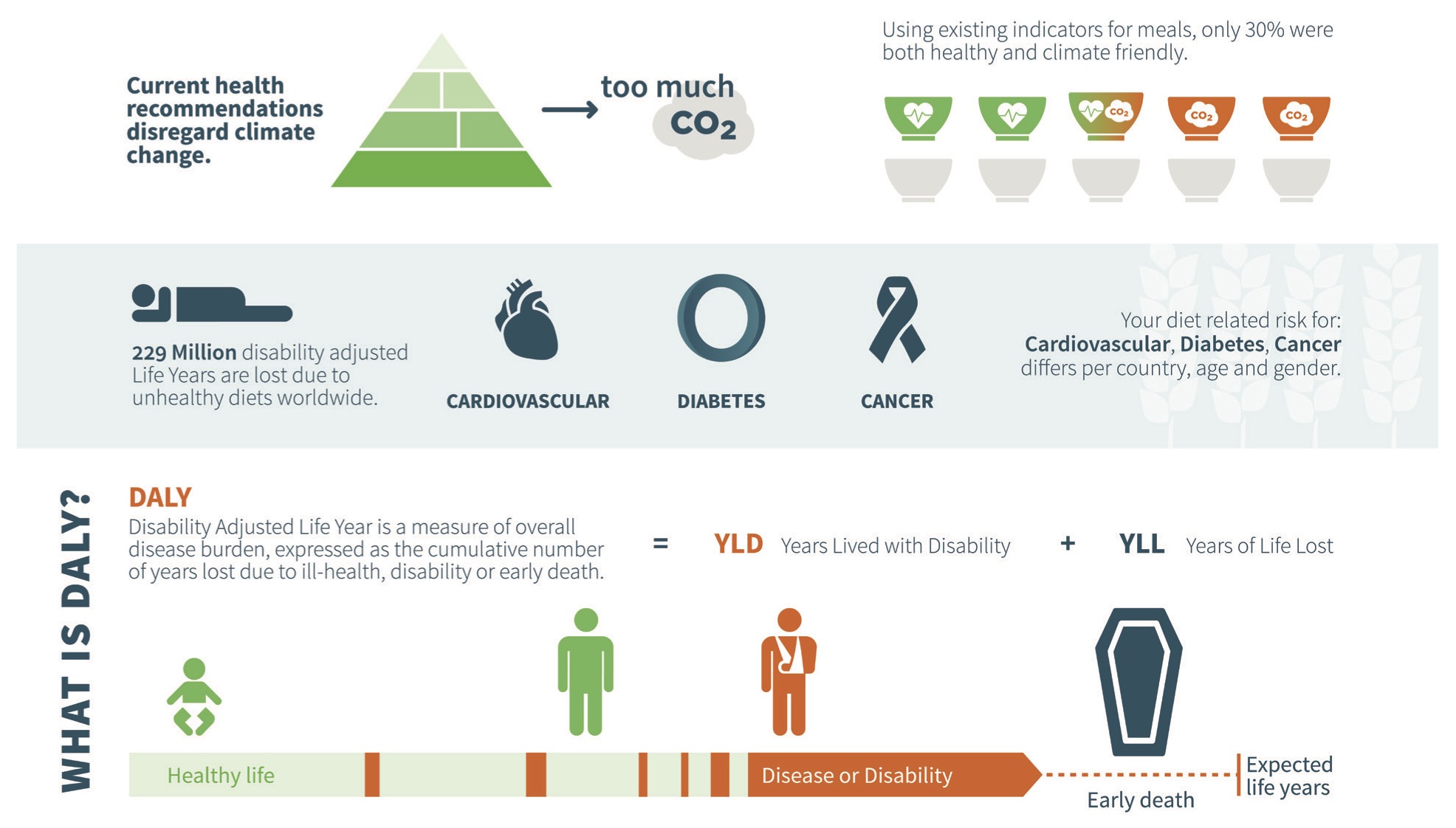
What we eat has a tremendous impact on our health and well-being, and bad dietary habits are a leading driver of death and disability worldwide. The Vita Score supports the goal of staying healthy by promoting a diet that minimizes food related disease risk such as cardiovascular disorders, diabetes and cancer.
Scientific Facts
The Global Burden of Diseases, Injuries, and Risk Factors Study (GBD) is the single largest and most detailed scientific effort ever conducted to quantify levels and trends in health. Led by the Institute for Health Metrics and Evaluation (IHME) at the University of Washington, it is truly a global effort, with over 12,000 researchers from more than 160 countries and territories participating in the most recent update.
It identifies 87 behavioral, environmental and occupational, and metabolic risks or clusters of risks that lead to diseases. Through the assessment of more than 90,000 studies it approaches accurate numbers for disability adjusted life years (DALY) lost per 100,000 people dependent on age, gender and location for each individual risk factor. It provides new insights on the risks we should be concerned to improve our lives.
A Health Indicator for Foods
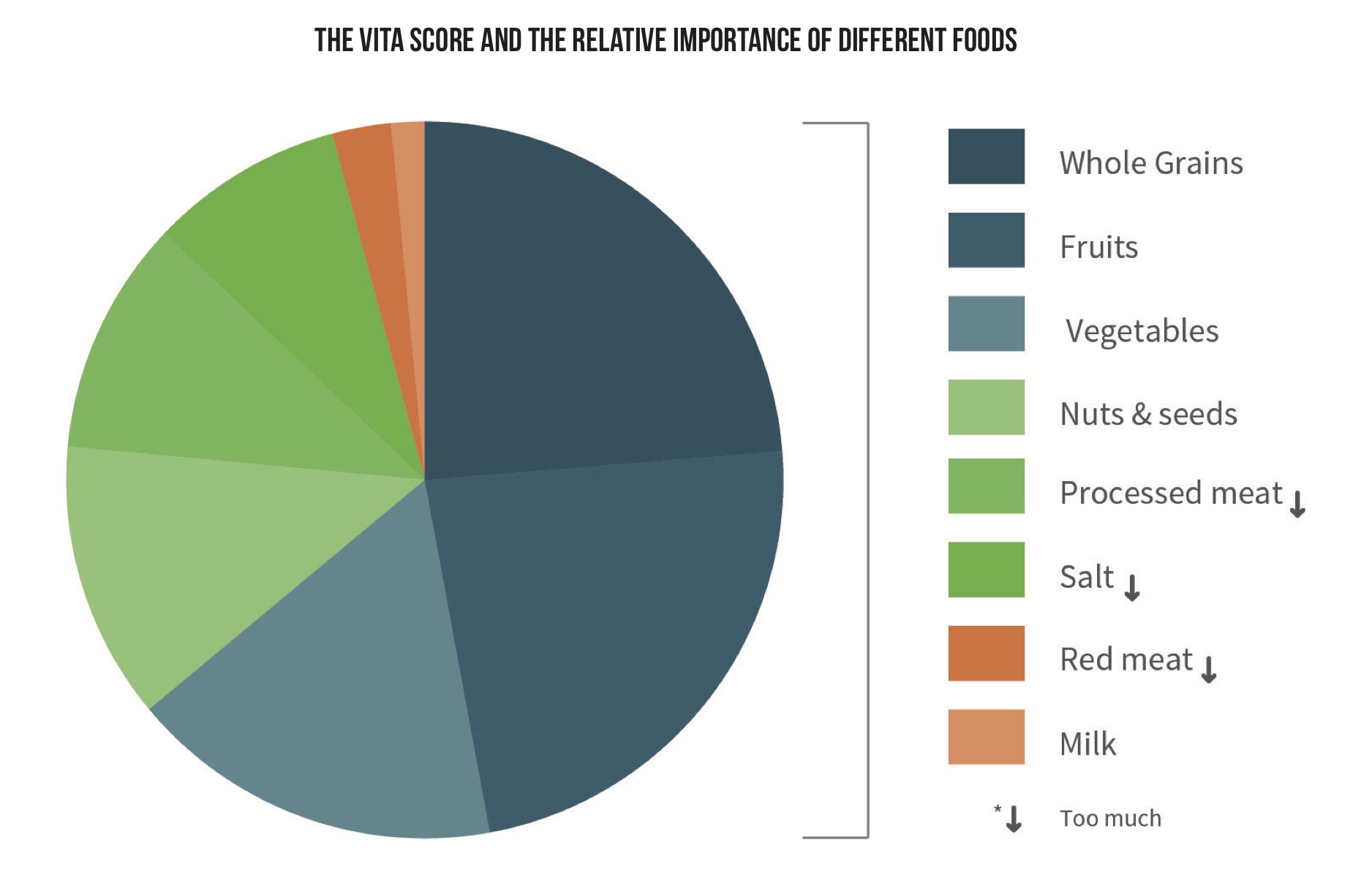
The Vita Score currently uses 8 non-overlapping dietary factors identified by the GBD study:
- Whole grains
- Fruits
- Vegetables
- Nuts and seeds
- Processed meat
- Red meat
- Milk
- Salt
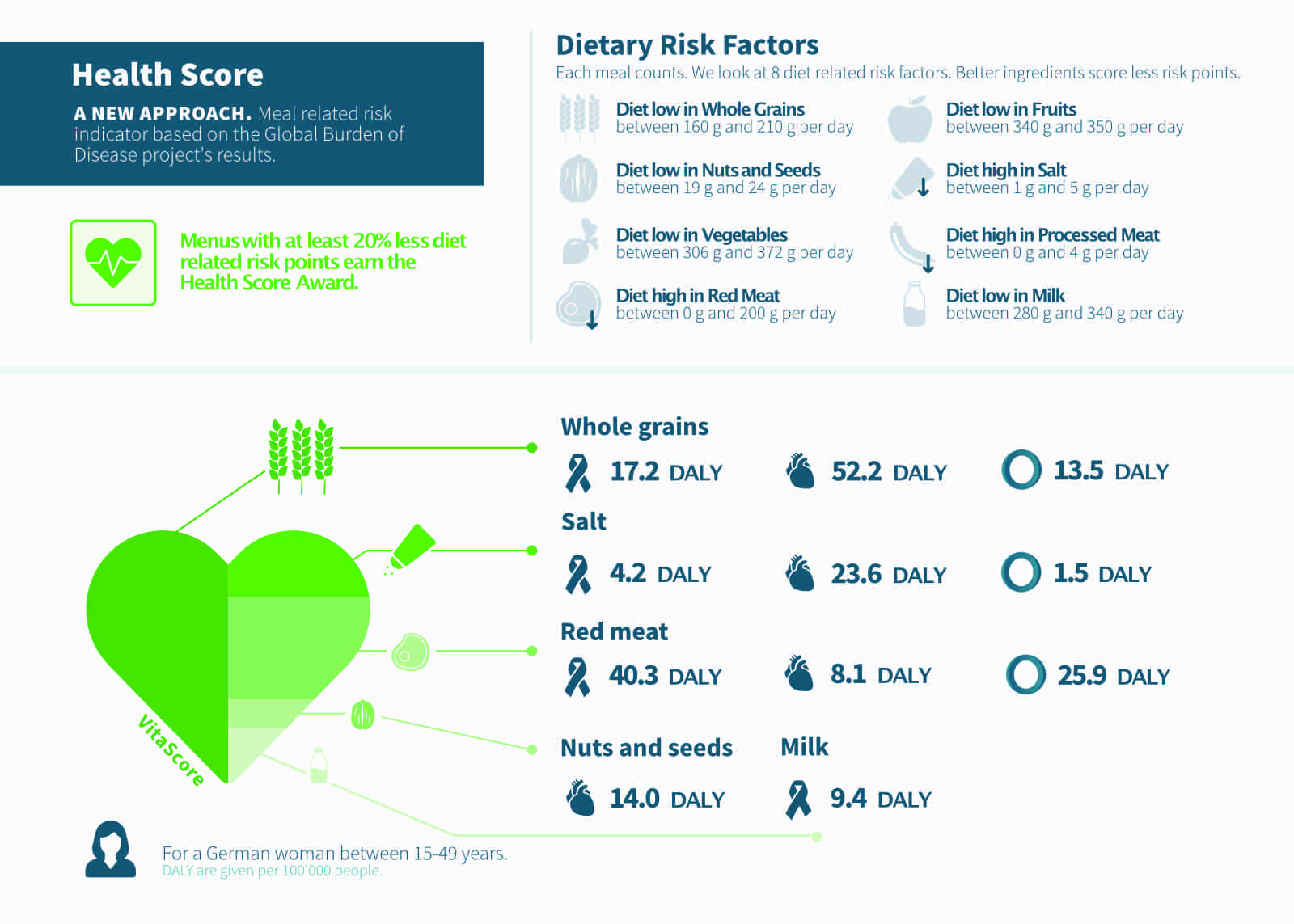
Providing a guideline to follow a "minimum risk diet", the Vita Score calculates how much of the recommendations are fulfilled in relation to the caloric content of a meal, weighted according to the severity of their outcomes.
For example, lack of wholegrains in the German population is related to 83 years of life lost per 100,000 people, whereas eating too much salt is related to 29 years of life lost.
The Vita Score Award
Foods with at least 20% less diet related risk points than all recorded meals and products earn the Vita Score Award. They have a 5 out of 5 heart rating.
Nutrition Score
Being aware of how to fuel our body. Eating balanced.
The nutritional content of a meal or product to meet the daily nutrient recommendations can be analyzed separately or together with the Vita Score. The Nutrition Score analyzes per person and portion if the food is "well balanced" in the sense that it provides you with all the daily energy requirements.
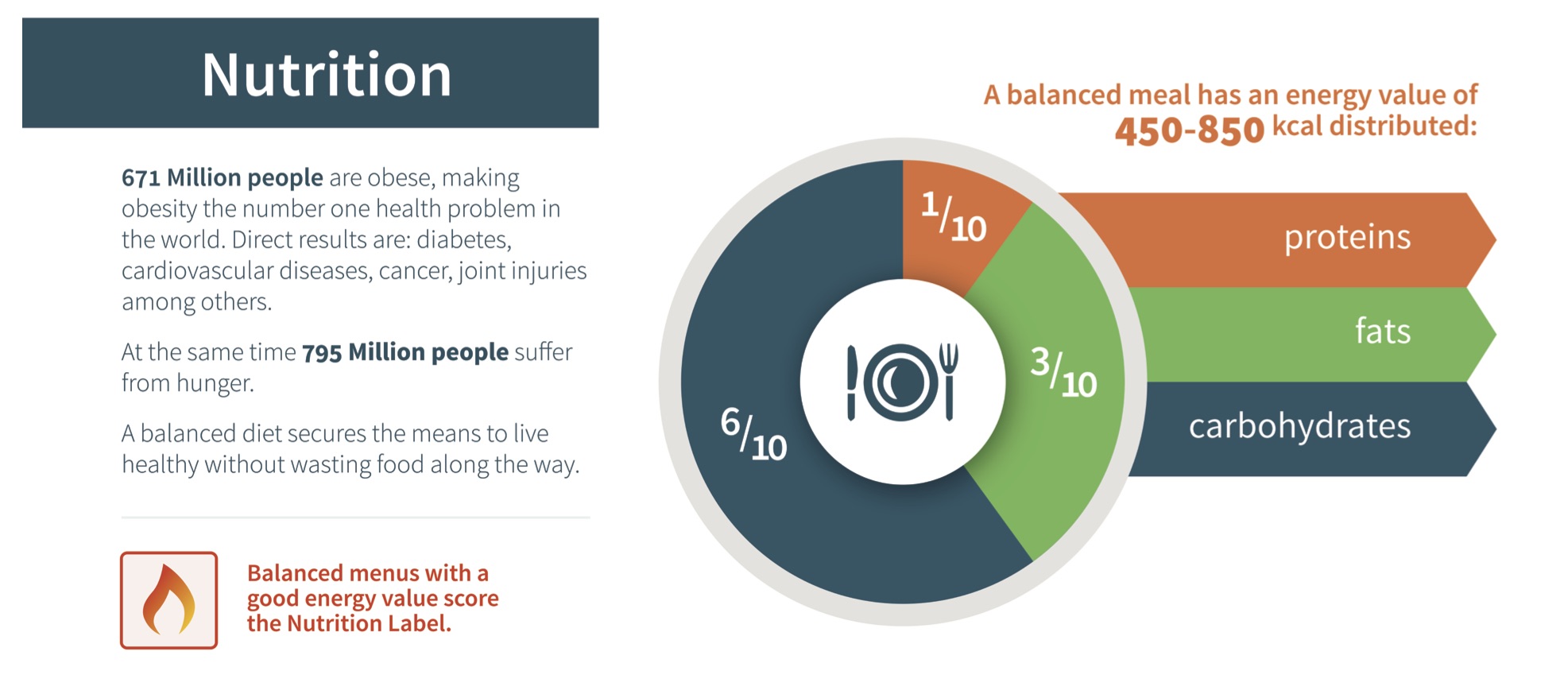
An average warm meal should provide about one-third of the recommended daily energy intake of 2,000 to 2,400 kcal. Nutrients that exceed this range will be clearly marked. This way, the nutritional content of a meal can be conveniently optimized toward the ideal proportion of proteins and fats. Risks from overeating are responsible for 50% of the DALYs lost due to obesity.
The Nutrition Score Rating
Balanced menus with a good energy value receive the 5-star Nutrition Score. These menus derive 10-35% of their calories from proteins and 20-35% from fat, while having a total energy value between 450 and 850 kcal.
References
The Vita Score is the result of the Health Footprint Project. Our aim was to create an indicator for meals that is deeply rooted in the newest and sound science. The indicator shows which meals are in line with the minimal risk diet to reduce the risk of diet related diseases.
As a consequence, Eaternity included the Vita Score as an indicator for healthiness of a meal into the Eaternity App to support the overall goal of eating healthy and climate friendly meals!
The results were reviewed by our scientific board of experts and partners. The project was made possible by the Engagement Fund Migros.
Publications
- Full Results of the Health Footprint Project
- Vita Score Documentation - Whitepaper
- Healthy eating guidelines (Swiss only)
Contributors
Project Organisation
- Aleksandra Aleksandrowicz, Eaternity
- Deputy: Judith Ellens, Eaternity
Advisory Board
- Dr. Baumgartner Stephanie, Public Health Schweiz, Switzerland
- Dr. Gaillard Gérard, Agroscope, Switzerland
- Dr. Müller Claudia, Zurich University of Applied Sciences, Switzerland
- Dr. Marco Springmann, University of Oxford, United Kingdom
- Dr. Meyer Stefan, EPFL Lausanne, Switzerland
- Dr. Speck Melanie, Wuppertal Institute for Climate, Environment and Energy, Germany
- Prof. Tukker Arnold, Leiden University, Netherlands
Experts and Stakeholders
- Baumer, Beatrice, Zurich University of Applied Sciences, Switzerland
- Dr. Kapitulčinová Dana, Charles University Prague, Czech Republic
- Dr. Rohrmann Sabine, University of Zurich, Switzerland
- Stalder Urs, Bundesamt für Lebensmittelsicherheit und Veterinärwesen – BLV, Switzerland
- Walker Christie, ETH Zürich, Switzerland
Made Possible By
Engagement Migros development fund and the Global Burden of Disease Project
Ready to Transform Your Food Impact?
Discover how Eaternity can help your organization achieve sustainability goals.
Get Started