
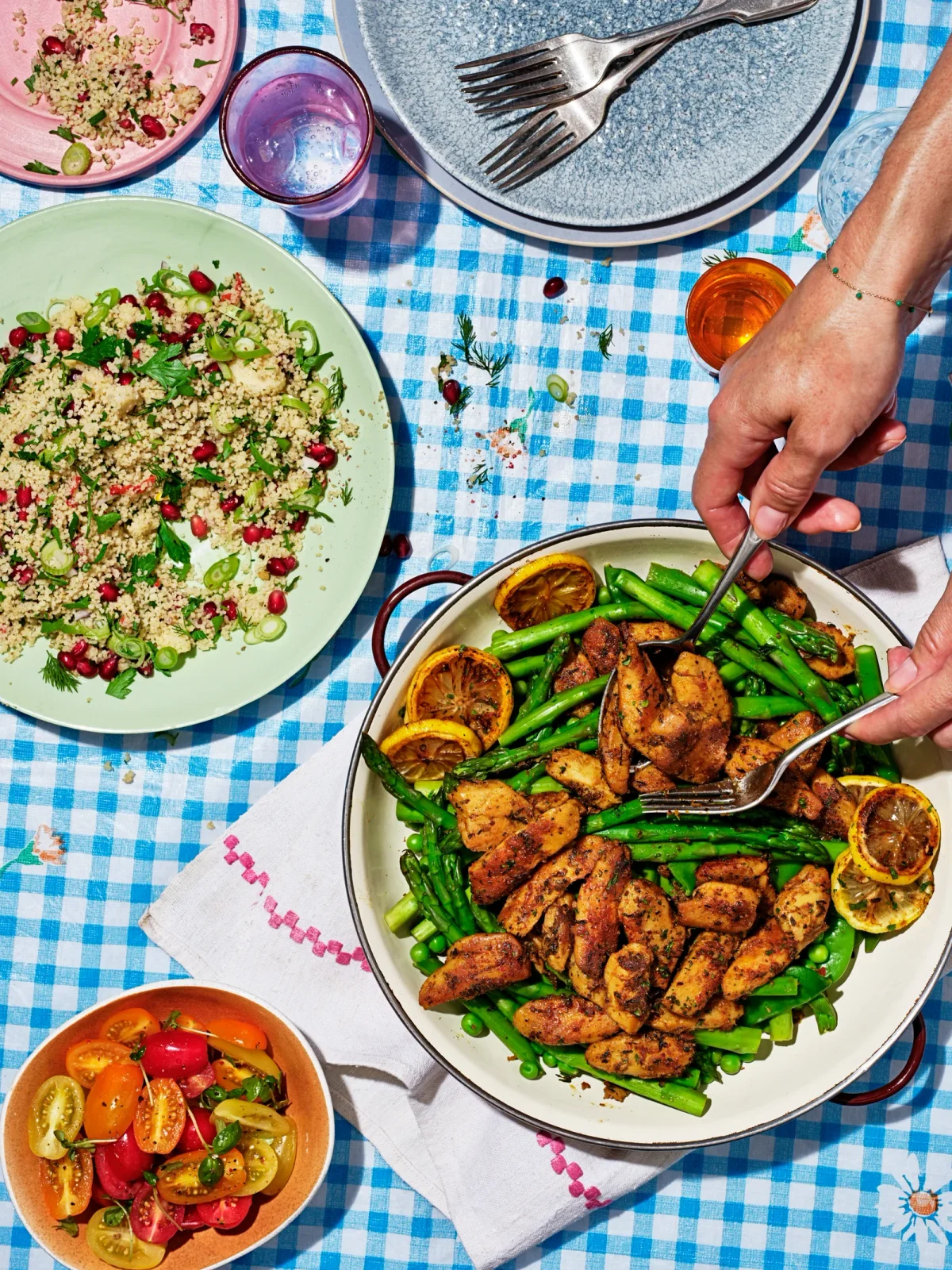
Planted: Reimagining Meat's Taste, Texture, and Climate Impact
Planted, one of Europe's leading plant-based meat innovators, partnered with Eaternity to scientifically measure and communicate the climate impact of its products through Life Cycle Assessments.
Planted: Reimagining Meat's Taste, Texture, and Climate Impact
Planted, one of Europe's leading plant-based meat innovators, partnered with Eaternity to scientifically measure and communicate the climate impact of its products. By integrating Eaternity's Life Cycle Assessment methodology and the Eaternity Score into product-level analysis and packaging communication, Planted strengthened transparency and credibility—while reinforcing its ambition to outperform animal meat on sustainability without compromising taste, quality, or nutrition.

Our approach is based on the conviction that genuine enjoyment and responsible use of natural resources must be compatible. By exclusively using natural ingredients and foregoing preservatives in all its products, Planted sets a completely new standard in the plant-based meat category, making it a healthy and sustainable option for everyone. Truly better than meat from animals.
— Klaudia Baube, Sustainability Expert, Planted Foods AG
Background: From ETH Zurich Spin-Off to European Market Leader
Planted is a Zurich-based FoodTech company founded in 2019 as a spin-off from ETH Zurich. The company develops plant-based meat using proprietary structuring and fermentation technologies, focusing on meat-like texture, juiciness, and exclusively natural ingredients—without additives or preservatives.
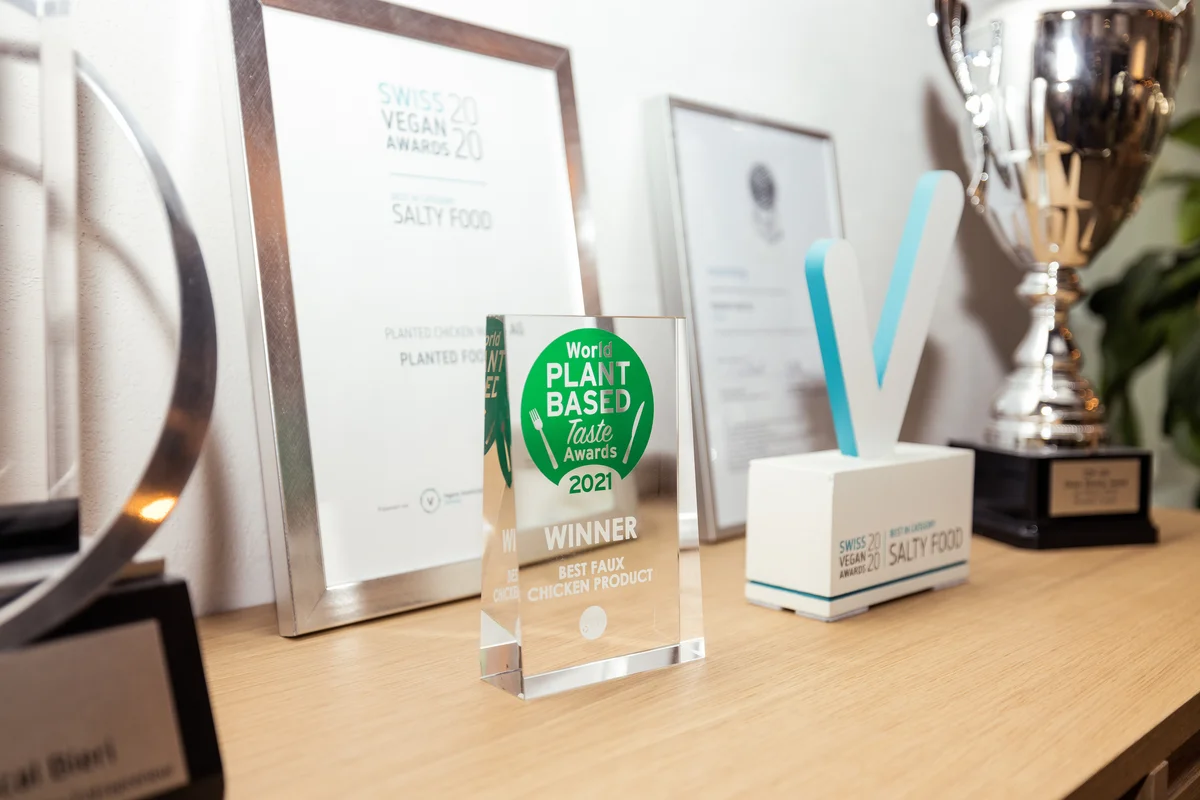
Today, Planted products are available in more than 6,500 restaurants and over 10,000 retail outlets across Switzerland, Germany, Austria, France, Italy, the United Kingdom, and the Benelux region. Planted collaborates closely with star chefs such as Tim Raue, Haya Molcho, and Sebastian Copien.
Planted's mission is to fundamentally improve the food system by offering plant-based meat that is environmentally superior to animal protein while remaining accessible, scalable, and desirable.
A growing population, increased life expectancy, and rising incomes are key factors driving the rise in global meat demand. However, the meat industry, in its current form, is far from sustainable. Planted aims to change that.
— Klaudia Baube, Sustainability Expert, Planted Foods AG
Challenge: From Claims to Credible Data
As Planted scaled across markets and product categories, sustainability claims needed to be backed by robust, comparable data.
The key challenges were:
- Making the actual climate impact of products measurable across the full value chain
- Communicating CO₂ emissions transparently and credibly, without greenwashing
- Identifying concrete reduction levers beyond ingredient choice alone
Transparency is a central part of our sustainability commitment. Measuring both the emissions caused and the emissions saved by our products allows us to make our actual environmental impact measurable and to communicate it based on facts.
— Klaudia Baube, Sustainability Expert, Planted Foods AG
Solution: Product-Level Life Cycle Assessments
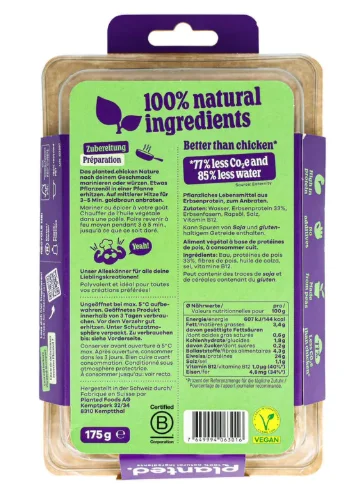
Planted partnered with Eaternity to calculate product-specific Life Cycle Assessments and translate these results into clear, consistent climate metrics using the Eaternity Score.
This allowed Planted to apply one standardized methodology across its growing product portfolio and communicate climate impact consistently across markets and channels.
Key Actions
- Eaternity conducted full Life Cycle Assessments covering raw materials, production, packaging, and logistics
- Applied a standardized methodology to ensure scientific robustness and comparability
- Planted integrated climate impact results into product communication and packaging
Real improvements can only be achieved if emissions are systematically assessed along the entire value chain. Through CO₂ footprint analysis, we can identify where we already perform significantly better than animal-based alternatives—and where further optimization potential lies.
— Klaudia Baube, Sustainability Expert, Planted Foods AG
Impact: Transparency That Drives Trust and Sales
The collaboration with Eaternity enabled Planted to translate its sustainability actions into quantified, product-level climate accountability.
We want to offer consumers, partners, and the public a clear basis for decision-making. Anyone who wants to consume more sustainably needs comprehensible data instead of vague promises.
— Klaudia Baube, Sustainability Expert, Planted Foods AG
Key Results
- Clear CO₂ visibility on product packaging for individual products
- Stronger trust with consumers, retail partners, and foodservice customers
- Proof that plant-based meat can succeed at mass-market level
Deutsche Bahn Partnership

A concrete example of this impact at scale is Planted's partnership with Deutsche Bahn. Since 2023, planted.bratwurst has been offered as a vegan currywurst option across all ICE and Intercity trains. In the same year, it accounted for 30% of all currywurst sold in DB Bord-Bistros.
Anyone who wants to reduce their meat consumption but doesn't want to miss out on the taste of a delicious currywurst can look forward to the new recipe for our vegan currywurst.
— Stefanie Berk, Head of Marketing and Sales, DB Fernverkehr
Learnings and Tips
1. Standardized product-level Life Cycle Assessments are essential for credible sustainability claims
Calculating full Life Cycle Assessments using a consistent methodology allowed Planted to move beyond generic comparisons and communicate climate impact at the individual product level—both internally and externally.
2. Protein sourcing decisions influence both climate impact and biodiversity risk
Choosing low-impact raw materials like peas, sunflower seeds, and rapeseed are key to sustainable production. For example, peas cause 13 times less CO₂ per 100 grams of protein than chicken. Diversifying protein sources to include European, GMO-free soy, rice, and beans helped Planted avoid tropical deforestation, reduce climate risk, and improve nutritional diversity.
3. Reducing food waste has a direct climate and efficiency benefit
By recycling production by-products, Planted reduced product losses by over 90%, cutting emissions associated with wasted raw materials and improving resource efficiency.
4. Packaging changes can deliver fast, measurable CO₂ reductions
Switching to rPET trays for Swiss retail products reduced packaging-related emissions by 66% compared to virgin plastic. Combined with FSC/PEFC-certified cartons, this enabled near-100% recyclability and eliminated landfill waste from packaging.
Environmental impact is of central importance to us because the production of animal proteins is currently one of the biggest drivers of greenhouse gas emissions, land-use change, and water consumption. With our products, we demonstrate that it is possible to significantly reduce the ecological footprint without compromising on taste, quality, or nutritional value.
— Klaudia Baube, Sustainability Expert, Planted Foods AG
Ready to Measure Your Product's Climate Impact?
Planted proves that science-based sustainability communication builds trust with consumers and partners alike. With the right methodology and transparent data, your products can stand out in an increasingly climate-conscious market.
Discover how Eaternity can help you calculate, optimize, and communicate your product's environmental footprint.
All images on this page are property of Planted Foods AG and are used with permission. All rights reserved.
Measure Your Product's Climate Impact
Our sustainability experts are here to help you understand how these insights can be applied to your specific situation and goals.
Contact us at hello@eaternity.orgReady to Transform Your Food Impact?
Discover how Eaternity can help your organization achieve sustainability goals.
Get Started