

Making Sustainability Measurable in Institutional Catering: A Conversation with necta
How necta and Eaternity are integrating climate data directly into catering operations, turning sustainability from a reporting exercise into a daily management tool.
Making Sustainability Measurable in Institutional Catering: A Conversation with necta
Sustainability in institutional catering cannot remain an abstract goal. It needs to become a concrete, manageable metric, just like food costs, waste ratios, or coverage margins. This is only possible when environmental data is embedded directly where operational decisions are made: in procurement, recipe management, and menu planning.
This is exactly why Eaternity and necta have joined forces. necta is one of the leading providers of digital merchandise management and catering operations software in the German-speaking market, supporting large-scale kitchens with tools for purchasing, inventory, recipe management, and planning. With their new platform necta.one, they are building an open, integration-ready architecture designed to connect operational and strategic data.
Through our partnership, Eaternity's validated carbon dioxide data, drawn from a Life Cycle Assessment database covering over 950 core ingredients built since 2008, flows directly into necta's operational systems via a live programming interface. The result: kitchen managers see real-time climate impact data right where they plan menus and manage recipes, without any additional tools, logins, or manual steps.
We spoke with Klaus Dittel, Product Manager at necta, about how digital infrastructure can make sustainability actionable in institutional catering.
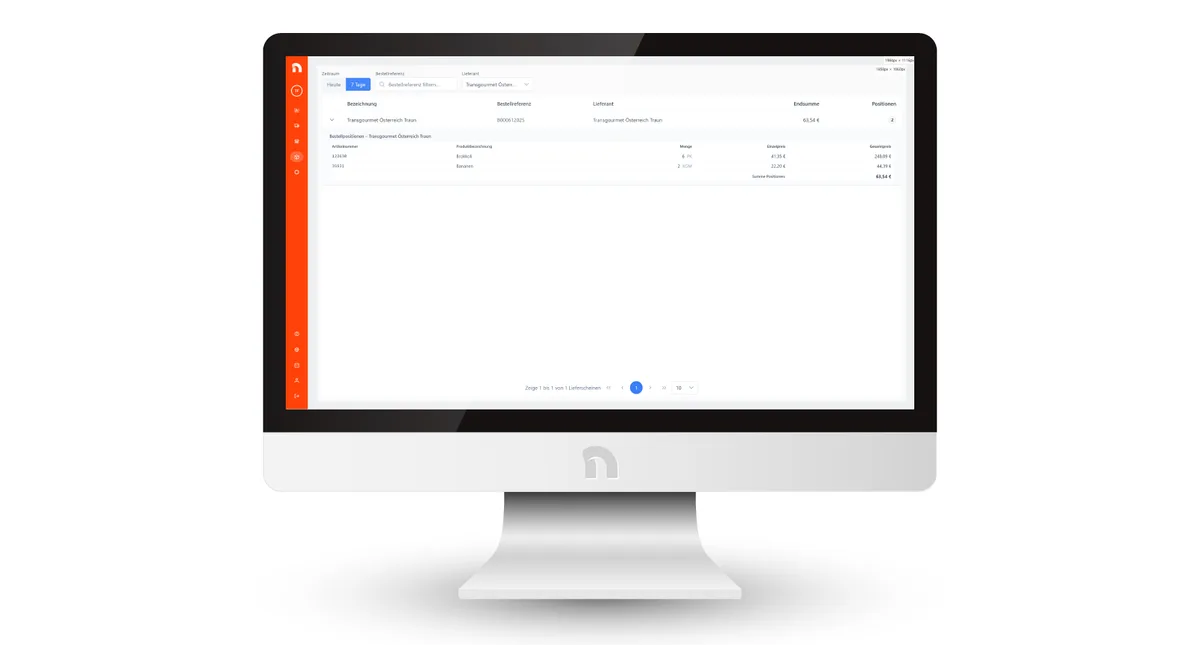
Interview with Klaus Dittel, Product Manager at necta
What role does digital merchandise management play today when it comes to making sustainability measurable and manageable in institutional catering?
Klaus Dittel: Digital merchandise management is now the foundation for being able to map sustainability in a reliable way at all. Without structured data on procurement, recipes, food costs, and inventory movements, sustainability remains an intention but never becomes a manageable metric. Institutional catering generates enormous amounts of data every day. When this data is systematically captured and linked, environmental indicators like carbon dioxide values or origin information can be placed in a real operational context. This is exactly where we see necta's role: not just mapping processes, but creating a consistent data foundation. With necta.one, we go a step further by deliberately building this data architecture to be open and integration-ready, so that sustainability information can be structurally embedded.
Why is it critical, from your perspective, to integrate sustainability data directly into operational systems like procurement, recipe management, and food cost analysis?
Klaus Dittel: Sustainability cannot be a separate reporting tool. When environmental indicators exist in isolation from daily operations, they rarely become relevant for action. Only when carbon dioxide values or origin information are visible directly during recipe creation, procurement, or food cost analysis does real steering capability emerge. Then kitchen managers can make conscious decisions, for example when selecting suppliers, designing menus, or planning portions. That is why integration into operational systems is decisive for us. necta is designed precisely for this: as a platform that connects operational and strategic data.
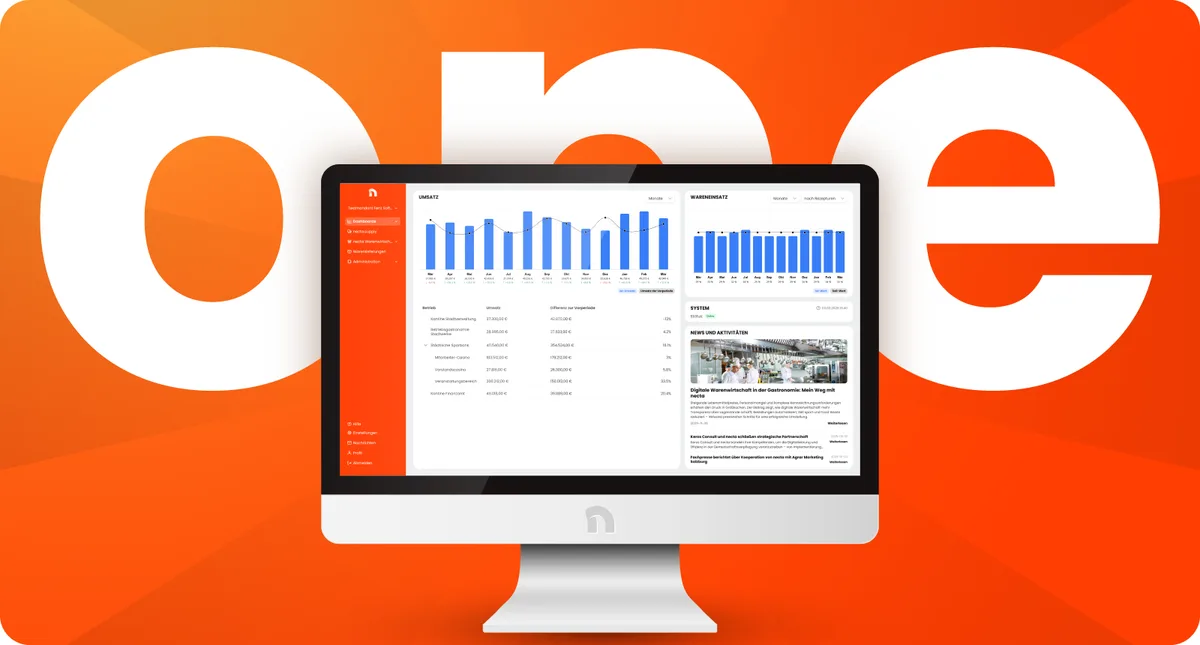
With necta.one you are pursuing a platform approach. How does this approach help anchor environmental indicators structurally in daily kitchen operations?
Klaus Dittel: The platform approach means, above all, openness and end-to-end connectivity. necta.one is not designed as an isolated system but as a connecting layer between procurement, production, controlling, and external partners. When sustainability data, for example from Eaternity, is integrated via programming interfaces, it can be directly linked with existing master data and processes. This means environmental indicators are not maintained separately but become part of the existing logic. That reduces complexity and increases acceptance, because sustainability becomes visible where decisions are actually made.
What distinguishes necta and the future necta.one from traditional merchandise management systems, particularly regarding data openness and integration capability?
Klaus Dittel: Traditional merchandise management systems are often strongly function-driven and self-contained. Integration is added after the fact. At necta, and especially with necta.one, we think about integration from the very beginning. The architecture is programming-interface-based and designed to structurally incorporate external data sources. This applies to point-of-sale systems just as much as to sustainability platforms or enterprise resource planning systems. This openness is decisive when sustainability is to be considered not in isolation but within the overall system. Only then can environmental, economic, and operational indicators be connected with each other.
How can sustainability data, such as carbon dioxide values or origin information, be meaningfully embedded into existing process and system landscapes?
Klaus Dittel: From our experience, this only works through clear interfaces and a clean master data structure. Sustainability information must be unambiguously assignable at the article or recipe level. When this link is established, carbon dioxide values can, for example, be automatically factored into calculations, meal plans, or evaluations. What matters is that processes do not become more complicated for the users. With necta.one, we create the technical foundation for structurally embedding such data without creating additional isolated solutions.
What challenges do you encounter with operations that want to not just document sustainability but actively manage it?
Klaus Dittel: One of the biggest challenges is data quality. When master data is maintained inconsistently or processes are not clearly defined, any form of sustainability management becomes difficult. Another point is acceptance in daily work. Sustainability must not be perceived as an additional control mechanism but needs to be understood as support. Digital systems can help here by creating transparency without generating additional manual effort.
What changes do you observe in kitchen managers when sustainability indicators become visible directly in their daily work?
Klaus Dittel: As soon as environmental indicators become visible in the operational system, the perspective shifts. Decisions are made more consciously, alternatives are examined, suppliers are questioned. We observe that sustainability thereby evolves from an abstract goal into a concrete management metric. It becomes part of the daily decision-making process, similar to food costs or coverage margins.
How do you see the future role of sustainability data in digital institutional catering: more of a reporting instrument or a management foundation?
Klaus Dittel: In the long term, sustainability data will clearly become a management foundation. Reporting is important, but it only describes the past. When sustainability indicators are structurally integrated into platforms like necta, they can flow into operational decisions in real time. Then what emerges is not just transparency but room for action. I am convinced that sustainability in institutional catering will in the future be managed just as naturally as costs or quality, provided the digital foundation is right.
From Reporting to Real-Time Decision-Making
This conversation makes one thing clear: sustainability in institutional catering is no longer a side project or an annual report topic. It is becoming an integral part of operational management, on the same level as cost control and quality assurance.
The partnership between necta and Eaternity demonstrates what this looks like in practice: validated climate data, embedded directly into the systems where kitchen managers already work every day. No additional tools. No manual data entry. Just the right information at the right moment.
With the European Union Directive 2024/825 on substantiating environmental claims taking effect in September 2026, operations will increasingly need scientifically grounded data to back any sustainability statements. The combination of necta's operational platform and Eaternity's Life Cycle Assessment database provides exactly this foundation.
necta also published a companion interview with Eaternity co-founder Manuel Klarmann on their blog, exploring how climate data can be made visible where it has the greatest impact. You can read it here: Sustainability in Institutional Catering: A Conversation with Eaternity
Ready to Make Sustainability Part of Your Daily Operations?
Whether you already use necta or are looking for ways to integrate climate data into your catering management, Eaternity can help. Our validated database covers over 950 core ingredients and connects via standard programming interfaces to the systems you already use.
Discover how Eaternity can bring reliable climate data into your kitchen operations.
All necta images and logo on this page are property of necta group and are used with permission. All rights reserved.
Integrate Climate Data Into Your Catering Operations
Our sustainability experts are here to help you understand how these insights can be applied to your specific situation and goals.
Contact us at hello@eaternity.orgReady to Transform Your Food Impact?
Discover how Eaternity can help your organization achieve sustainability goals.
Get Started