Vita Score
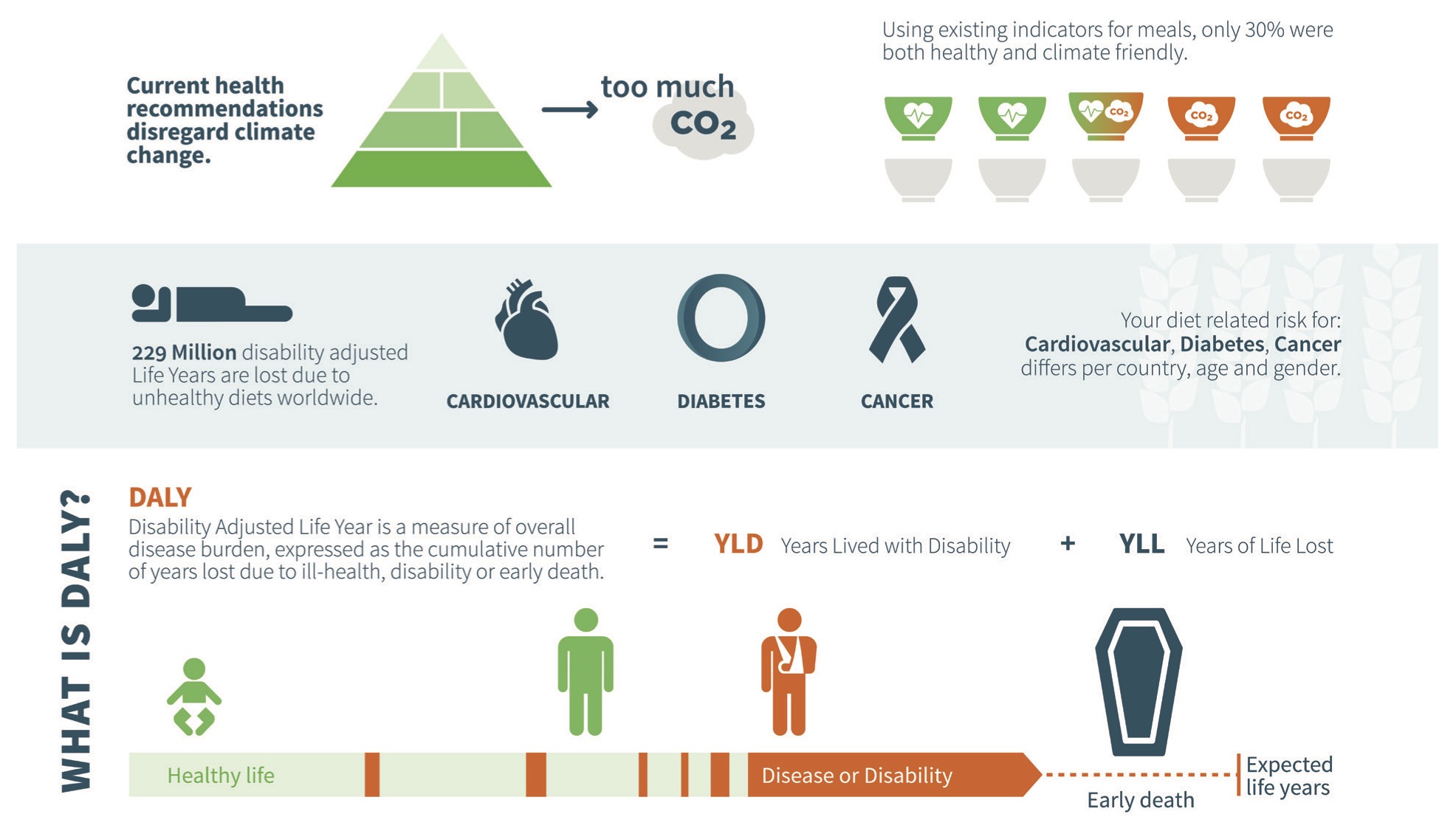
The Vita Score is a nutritional quality indicator developed by Eaternity to assess the overall healthiness of diets based on scientific research from the Global Burden of Disease Study.
Why Vita Score Matters
What we eat has a tremendous impact on our health and well-being. Bad dietary habits are a leading driver of death and disability worldwide, contributing to cardiovascular disorders, diabetes, and cancer. The Vita Score supports the goal of staying healthy by promoting a diet that minimizes food-related disease risk.
Scientific Foundation
Global Burden of Disease Study
The Global Burden of Diseases, Injuries, and Risk Factors Study (GBD) is the largest and most detailed scientific effort ever conducted to quantify health levels and trends:
- Led by the Institute for Health Metrics and Evaluation (IHME) at the University of Washington
- Over 12,000 researchers from 160+ countries
- Assessment of more than 90,000 studies
- Identifies 87 behavioral, environmental, occupational, and metabolic risks leading to disease
The GBD provides disability adjusted life years (DALYs) lost per 100,000 people, dependent on age, gender, and location for each individual risk factor.
Key Finding
Diet-related risks are among the top contributors to global disease burden:
- High blood pressure
- Dietary risks
- High body-mass index
What It Measures
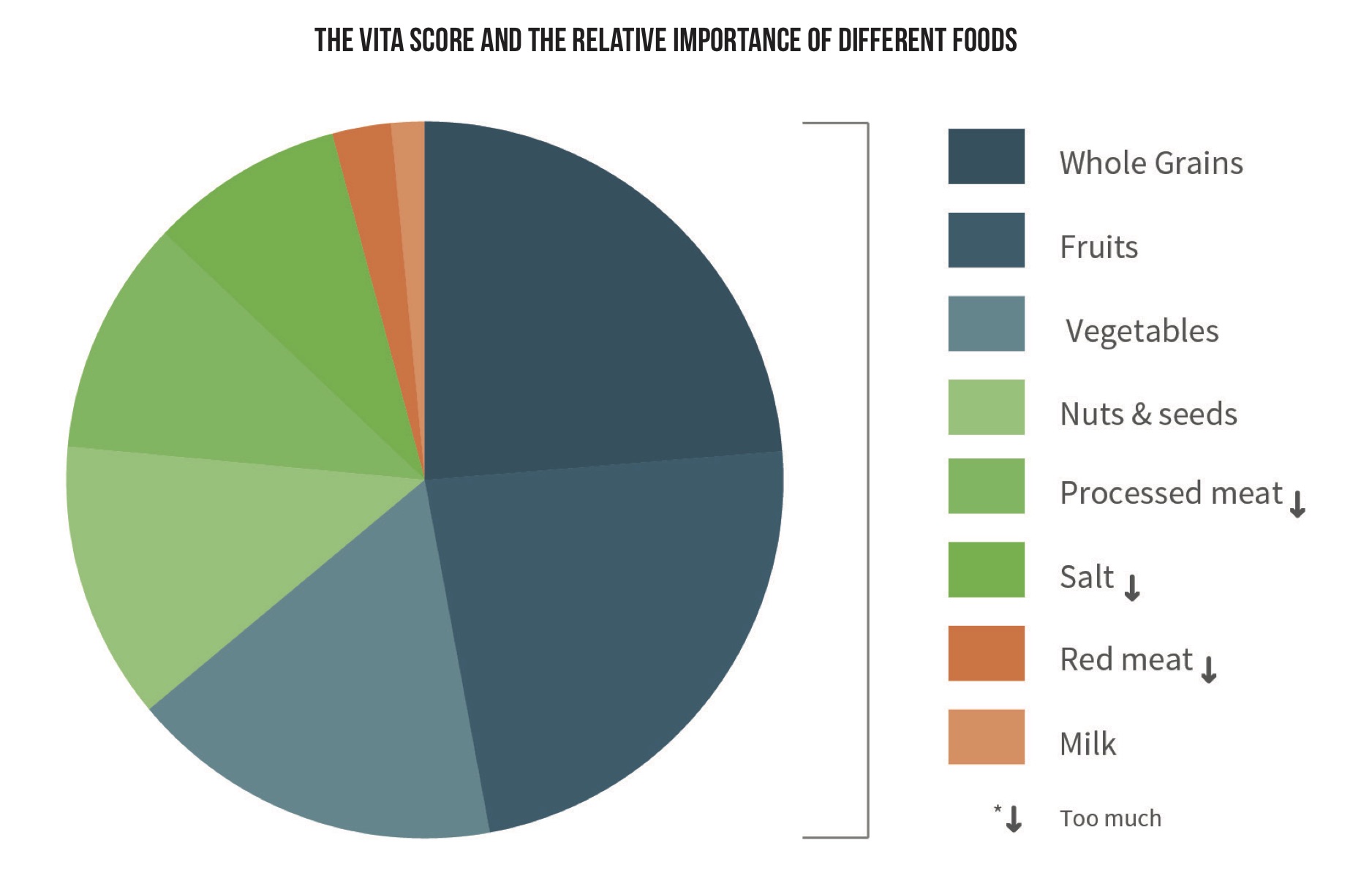
The Vita Score currently uses 8 non-overlapping dietary factors identified by the GBD study:
- Whole grains
- Fruits
- Vegetables
- Nuts and seeds
- Processed meat
- Red meat
- Milk
- Salt
Dietary Risk Factors
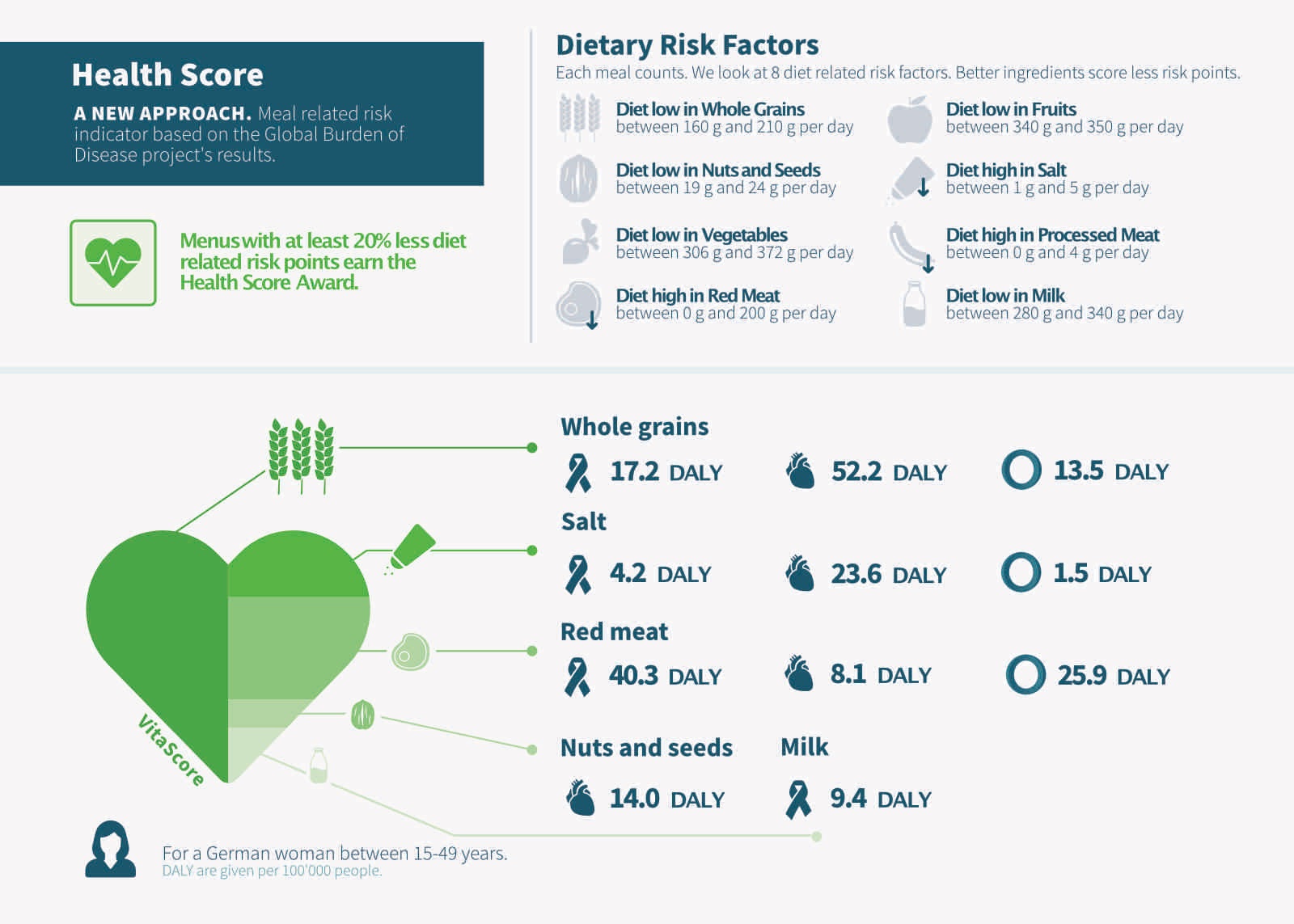
Based on the Global Burden of Disease study for Germany:
| Risk Factor | Impact (DALYs per 100,000) |
|---|---|
| High processed meat | 96.94 |
| Low whole grains | 82.86 |
| High red meat | 74.25 |
| Low fruits | 61.24 |
| Low fiber | 39.57 |
| Low legumes | 32.96 |
| Sugary drinks | 31.18 |
| Low vegetables | 30.57 |
| High salt | 29.43 |
| Low omega-3 | 23.95 |
| Low nuts and seeds | 13.98 |
| Low milk | 9.42 |
DALYs = Disability Adjusted Life Years
Calculation Components
1. Nutrient Balance Score (Adiposity)
Evaluates calories, protein, and fat balance against optimal ranges. Risks from overeating are responsible for 50% of the DALYs lost due to obesity.
Optimal Meal Targets:
- Energy: 450-850 kcal (optimal: 650 kcal)
- Protein: 10-35% of calories
- Fat: 20-35% of calories
Formula:
A = Deviation from calorie range (capped at 1)
B = Deviation from fat range (capped at 1)
C = Deviation from protein range (capped at 1)

AdiposityPoints = (A + B + C) × 531.95 × 0.5 / 3
Where 531.95 is the DALY value for obesity in Germany.
2. Dietary Factors Score
Each food is evaluated against "minimum risk exposure levels":
| Factor | Low Risk Range | High Risk Threshold |
|---|---|---|
| Whole grains | 100-150 g/day | < 50 g/day |
| Fruits | 200-300 g/day | < 100 g/day |
| Vegetables | 290-430 g/day | < 150 g/day |
| Nuts and seeds | 16-25 g/day | < 8 g/day |
| Processed meat | 0-4 g/day | > 10 g/day |
| Red meat | 18-27 g/day | > 50 g/day |
| Salt | < 3 g/day | > 5 g/day |
3. Final Score
VitaScorePoints = AdiposityPoints + DietaryFactorsPoints
Rating Scale
The Vita Score uses a 5-star rating system where A is best (⭐⭐⭐⭐⭐) and E is worst (⭐):
| Rating | Stars | 3-Star | Icon | Meaning | Points Threshold |
|---|---|---|---|---|---|
| A | ⭐⭐⭐⭐⭐ | ⭐⭐⭐ |  | 20% better than average | < 280 points |
| B | ⭐⭐⭐⭐ | ⭐⭐ |  | Average or better | < 340 points |
| C | ⭐⭐⭐ | ⭐ |  | Worse than average | < 420 points |
| D | ⭐⭐ | ⭐ |  | Significantly worse | < 468 points |
| E | ⭐ | ⭐ |  | Worst category | ≥ 468 points |
One point corresponds to approximately 1 life year lost per 100,000 people if someone followed a diet composed of this food. Lower scores are better.
Vita Score Award

Foods with at least 20% less diet-related risk points than all recorded meals and products earn the Vita Score Award — indicated by a 5-star (A) rating.
Nutrition Score
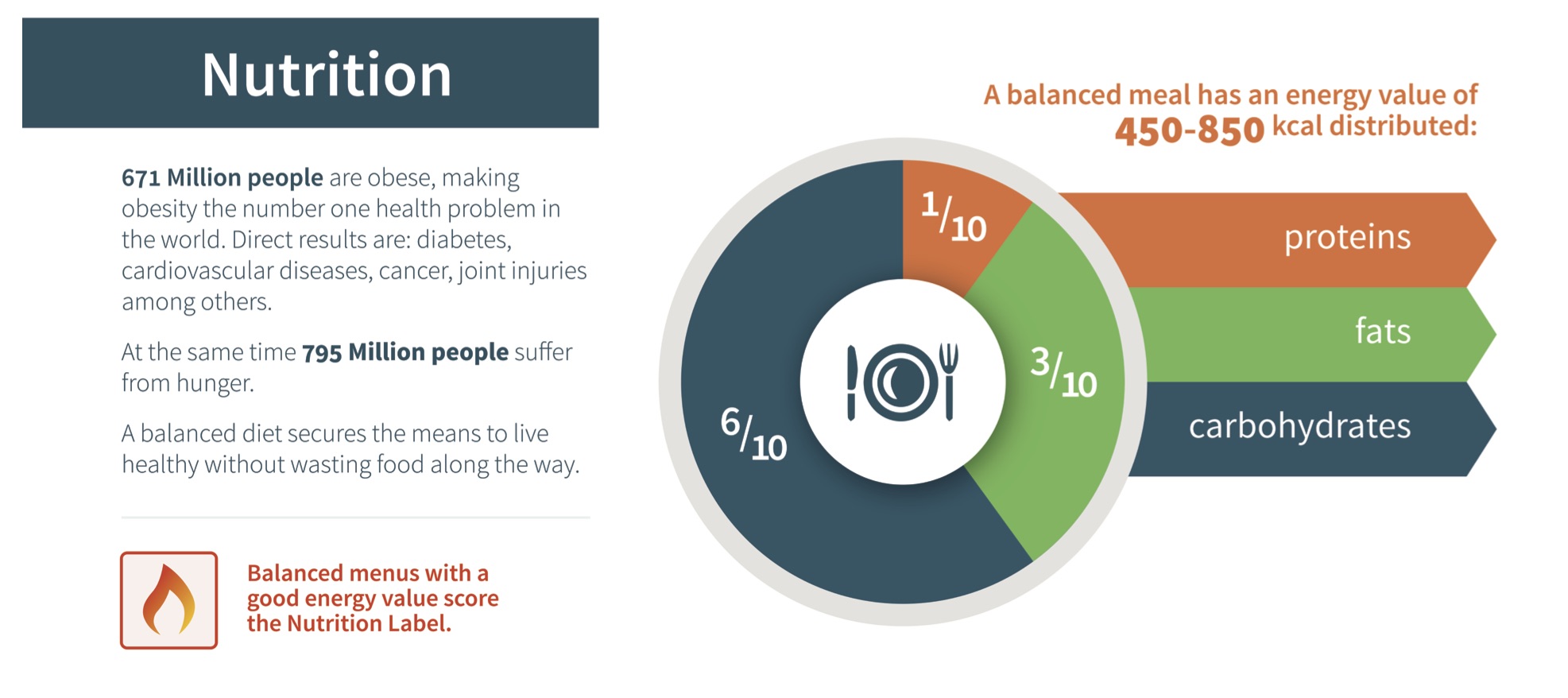
The nutritional content of a meal or product can be analyzed separately or together with the Vita Score. The Nutrition Score analyzes per person and portion if the food is "well balanced" in the sense that it provides the daily energy requirements.
An average warm meal should provide about one-third of the recommended daily energy intake of 2,000 to 2,400 kcal. Nutrients that exceed this range are clearly marked, allowing nutritional content to be optimized toward the ideal proportion of proteins and fats.
Balanced Nutrition Rating: Balanced menus with good energy values receive the 5-star Nutrition Score when they:
- Derive 10-35% of calories from proteins
- Derive 20-35% of calories from fat
- Have total energy between 450 and 850 kcal
Examples
High Vita Score Foods
- Whole grain products
- Fresh fruits and vegetables
- Legumes and pulses
- Nuts and seeds
- Fish (omega-3 rich)
Low Vita Score Foods
- Processed meats (sausages, bacon)
- High-sodium snacks
- Sugary beverages
- Refined grain products
Future Developments
Planned improvements:
- Location-specific DALY values for different countries
- Exclusion of overlap in risk factors where not yet corrected
- Inclusion of additional dietary categories
References
The Vita Score is the result of the Health Footprint Project, creating an indicator for meals deeply rooted in sound science. The indicator shows which meals align with the minimal risk diet to reduce diet-related disease risk.
Publications
- Full Results of the Health Footprint Project
- Vita Score Documentation - Whitepaper (PDF)
- Healthy Eating Guidelines (PDF)
Contributors
The results were reviewed by a scientific board of experts and partners.
Advisory Board
- Dr. Stephanie Baumgartner, Public Health Schweiz, Switzerland
- Dr. Gérard Gaillard, Agroscope, Switzerland
- Dr. Claudia Müller, Zurich University of Applied Sciences, Switzerland
- Dr. Marco Springmann, University of Oxford, United Kingdom
- Dr. Stefan Meyer, EPFL Lausanne, Switzerland
- Dr. Melanie Speck, Wuppertal Institute for Climate, Environment and Energy, Germany
- Prof. Arnold Tukker, Leiden University, Netherlands
Experts and Stakeholders
- Beatrice Baumer, Zurich University of Applied Sciences, Switzerland
- Dr. Dana Kapitulčinová, Charles University Prague, Czech Republic
- Dr. Sabine Rohrmann, University of Zurich, Switzerland
- Urs Stalder, Federal Food Safety and Veterinary Office (BLV), Switzerland
- Christie Walker, ETH Zürich, Switzerland
Made Possible By
Engagement Migros development fund and the Global Burden of Disease Project.
See Also
- Nutrition Benchmark — Nutritional reference values
- Ratings Overview — All rating categories
- Methodology — Calculation methods