Technical Deep Dive
EOS Core follows a layered architecture designed for modularity, extensibility, and auditable environmental impact calculations.
System Overview
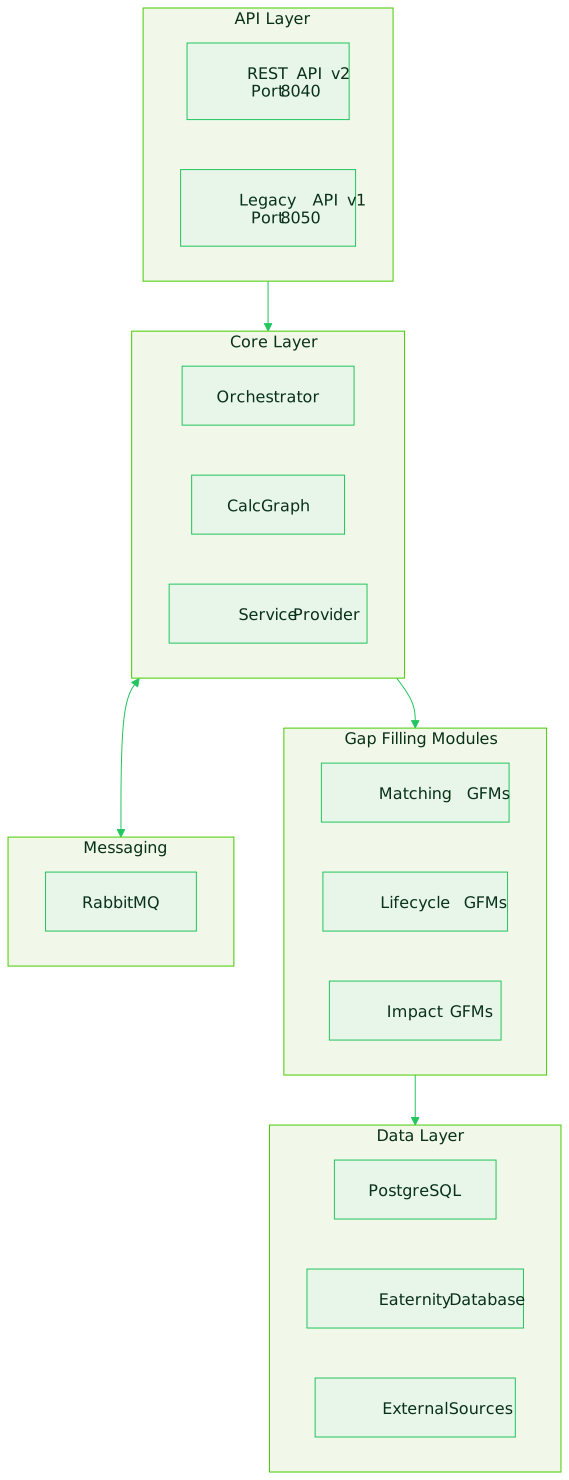
Architectural Layers
API Layer
The API layer provides two interfaces:
REST API v2 (/v2/* on port 8040)
- FastAPI-based modern REST API
- JWT token authentication with access groups
- Batch calculation support
- Structured request logging
- Graceful shutdown with drain file detection
Legacy API v1 (/api/* on port 8050)
- Backward-compatible endpoints
- Wraps v2 API functionality
- Supports legacy authentication methods
Core Layer
CalcGraph - The central calculation structure:
# CalcGraph manages the entire calculation as a directed graph
class CalcGraph:
    root_node_uid: str           # Entry point for calculation
    nodes: dict[str, Node]       # All nodes in the graph
    mutations: list[Mutation]    # Auditable change log

    def add_graph_observer(observer)  # GFM triggering
    def apply_mutation(mutation)       # Transparent changes
Orchestrator - Coordinates GFM execution:
class Orchestrator(AbstractGraphObserver):
    async def run():
        # 1. Initialize nodes from root or linked sub-nodes
        # 2. Spawn GFM workers on initial nodes
        # 3. Scheduler loop:
        while gfms_pending:
            for gfm in scheduled_gfms:
                if gfm.should_be_scheduled():
                    status = gfm.can_run_now()
                    if status == READY:
                        await gfm.run(calc_graph)
                    elif status == WAITING:
                        reschedule(gfm)
Service Provider - Dependency injection container:
class ServiceProvider:
    postgres_db: PostgresDb
    glossary_service: GlossaryService
    matching_service: MatchingService
    node_service: NodeService
    calc_service: CalcService
    gap_filling_module_loader: GapFillingModuleLoader
    # ... additional services
Module Layer
Modules follow the Factory/Worker pattern:
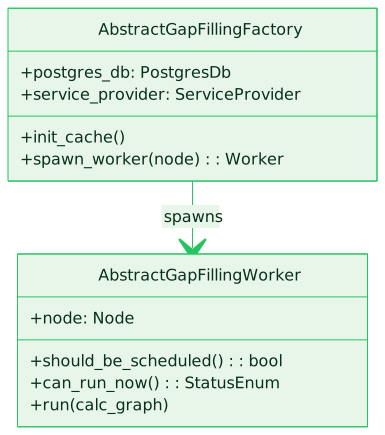
Factory (Singleton per service):
- Initialized once at service startup
- Holds database connections and caches
- Spawns workers for individual nodes
Worker (Per node):
should_be_scheduled()- Is this GFM relevant for this node?can_run_now()- Are dependencies satisfied?run()- Execute the gap-filling logic
Data Layer
PostgreSQL with asyncpg:
- Connection pooling for async operations
- JSONB fields for flexible node property storage
- Schema in
database/postgres/schema.sql
Manager Classes (DAO pattern):
PostgresGraphMgr- Node/edge persistencePgTermMgr- Glossary operationsPgMatchingMgr- Ingredient matching dataPostgresAccessMgr- User/group access control
Node Types
EOS uses a rich type system for graph nodes:
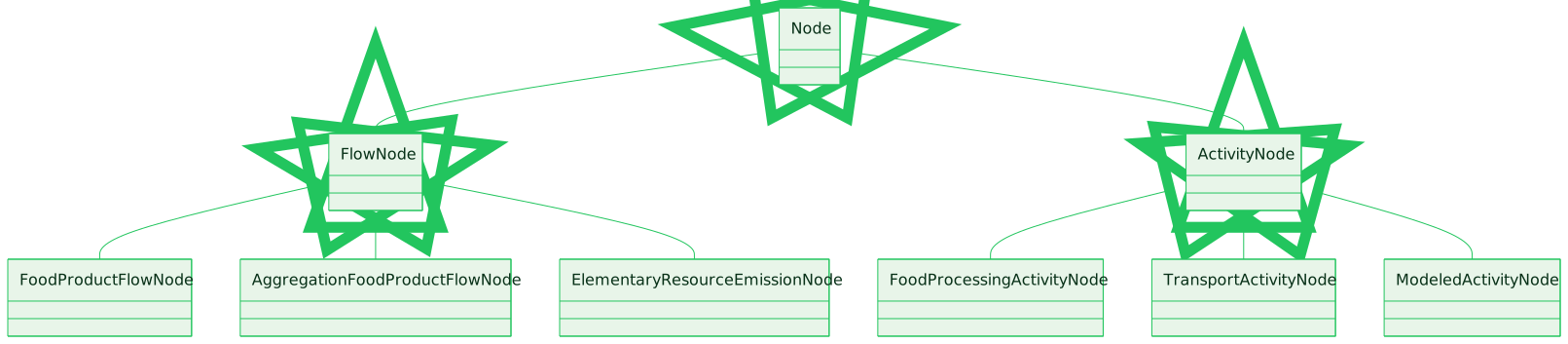
| Node Type | Purpose |
|---|---|
FoodProductFlowNode | Food product with composition |
AggregationFoodProductFlowNode | Daily aggregation caches for performance optimization |
ElementaryResourceEmissionNode | Environmental emissions |
FoodProcessingActivityNode | Processing operations |
TransportActivityNode | Transportation |
ModeledActivityNode | Brightway LCA inventory |
Property System
Nodes store data through typed properties:
| Property Type | Description |
|---|---|
QuantityProp | Measurements with units |
LocationProp | Geographic data |
GlossaryTermProp | Links to terminology |
EnvironmentalFlowsProp | Impact results |
NamesProp | Multi-language naming |
GfmStateProp | GFM execution state |
Data Flow
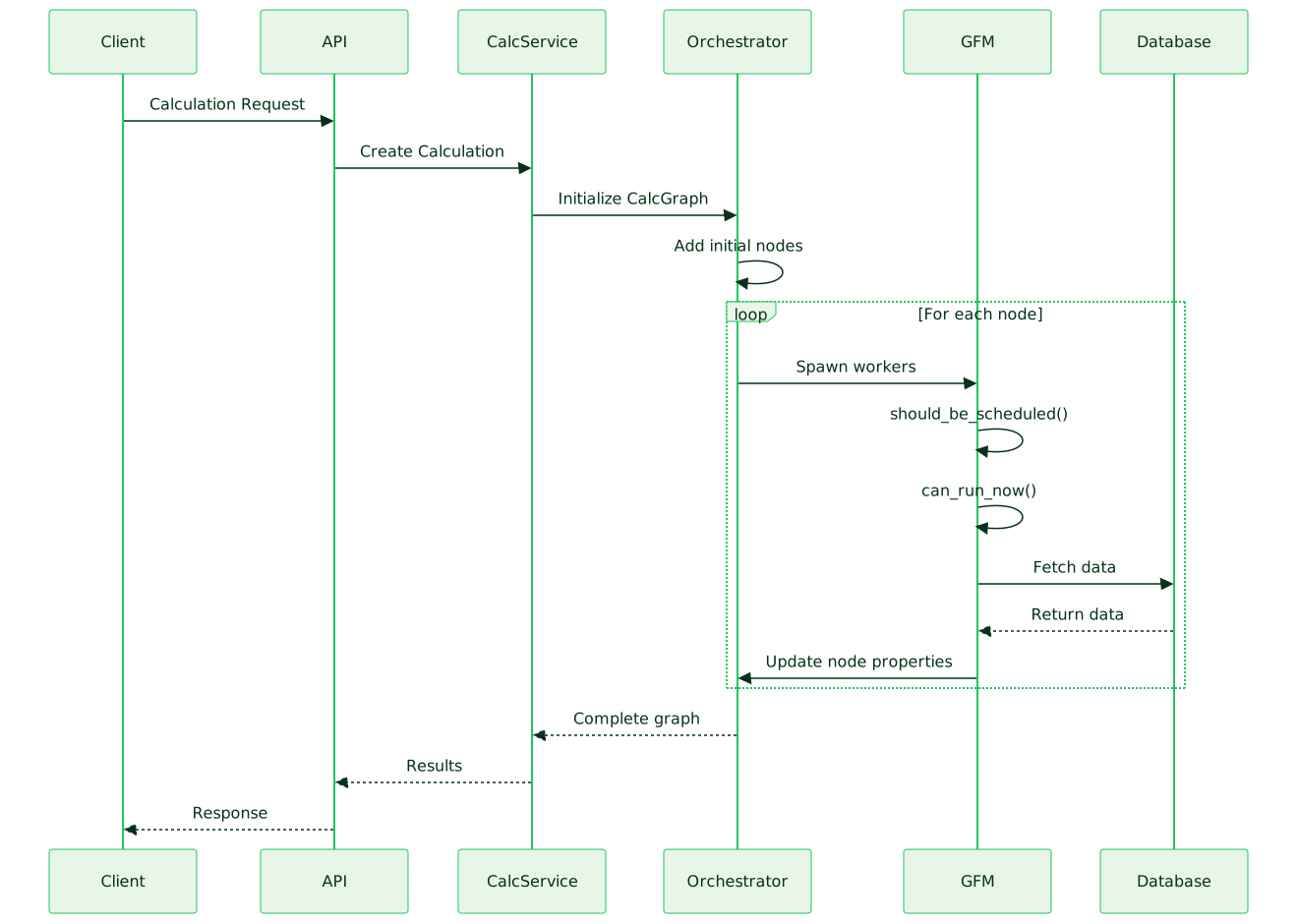
Multi-Tenancy
EOS supports multi-tenant isolation:
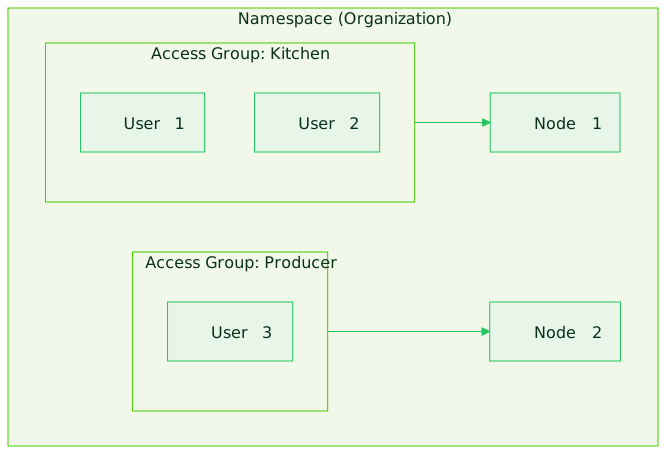
- Namespace - Organization/ecosystem isolation
- Access Group - Team/department within namespace
- User - Individual with OAuth2/email authentication
- Permissions - Per-node access control
Messaging Architecture
RabbitMQ enables distributed processing:
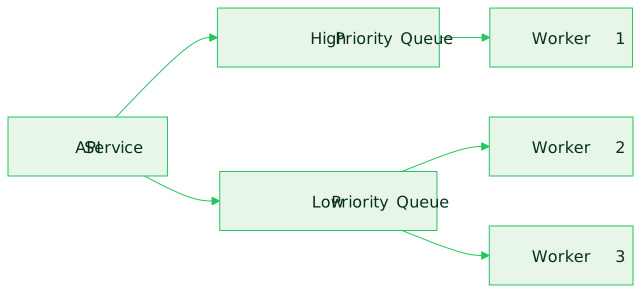
- High priority queue - Interactive requests
- Low priority queue - Batch processing
- Prefetch management - Resource-aware scheduling
Error Handling
Structured error model for domain errors:
@dataclass
class DataError:
    node_uid: str
    gfm_name: str
    message: str
    classification: ErrorClassification  # missing_matching, missing_lca_inventory, etc.
    log_level: LogLevel  # INFO, WARNING, ERROR
Graph Mutations
All graph changes are transparent and auditable:
| Mutation Type | Purpose |
|---|---|
AddNodeMutation | Insert new node |
PropMutation | Update single property |
AddEdgeMutation | Create node relationship |
RemoveEdgeMutation | Delete relationship |
DuplicateNodeMutation | Clone node |
Benefits:
- Auditability - Full mutation log
- Determinism - Reproducible calculations
- Transparency - Non-technical review possible
Performance Architecture
EOS is optimized for real-time environmental impact calculations, targeting sub-2-second response times for interactive restaurant applications.
Performance Optimizations
| Optimization | Impact |
|---|---|
| Matrix Calculations | Accelerated from 5s to 1s per calculation (80% improvement) |
| Concurrent Processing | Parallel operation across multiple pods with intelligent request queuing |
| GADM Service | Rust implementation achieving 3x memory reduction and 10x speed improvement |
| Multi-level Caching | In-memory callbacks at each LCA level within the same instance |
| Load Balancing | RabbitMQ-based request distribution across worker pods |
Scalability
The system uses Elastic Kubernetes Service (EKS) with automatic scaling:
- Dynamic Scaling: Up to 1024 pods based on workload
- Karpenter: Automatic node provisioning and scaling
- Resource Optimization: Separated legacy and core deployments for efficient RAM usage
- Microservice Architecture: Streamlined in-memory processing to minimize messaging complexity
Caching Strategy
Multi-level caching reduces computational load:
┌─────────────────────────────────────────────────┐
│  Request Level   │ Cached calculation results  │
├─────────────────────────────────────────────────┤
│  GFM Level       │ Factory caches (emissions,  │
│                  │ activities, glossary terms) │
├─────────────────────────────────────────────────┤
│  Database Level  │ Connection pooling,         │
│                  │ query result caching        │
└─────────────────────────────────────────────────┘
- Intelligent cache invalidation based on data changes
- Selective invalidation to minimize recomputation
- Distributed caching for cloud deployments
Security Architecture
EOS implements a multi-layered security approach:
Authentication
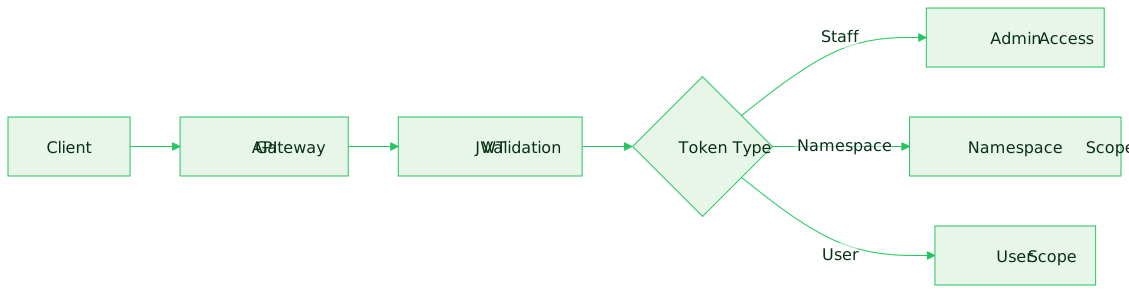
Token Types:
- Staff tokens - Administrative access with elevated privileges
- Namespace tokens - Organization-level access
- User tokens - Individual user access with limited validity periods
Network Security
- Private Subnets: Worker nodes operate in private subnets
- Bastion Host: SSH access to VPC through bastion
- Access Groups: IAM roles for fine-grained access control
Monitoring
- CloudWatch: Continuous system monitoring and logging
- Structured Logging: Request tracking and performance metrics
- Health Checks: Automated system health monitoring
Brightway Integration
EOS leverages Brightway, an open-source LCA framework:
Why Brightway?
| Capability | Benefit |
|---|---|
| Flexibility | Custom-tailored LCA calculations for diverse food products |
| Database Integration | Easy integration with ecoinvent, Agribalyse via import routines |
| Uncertainty Analysis | Robust methods for sensitivity analysis |
| Scalability | Handles complex calculations for detailed assessments |
| Community | Open-source with continuous methodology updates |
Matrix Transformation
The Matrix Transform is the computational core for LCA calculations:
- Graph to Matrix: Convert supply chain networks into mathematical matrices
- Input-Output Modeling: Represent relationships between processes
- Matrix Algebra: Calculate cumulative environmental impacts
- Impact Assessment: Apply LCIA methods (e.g., IPCC GWP100)
# Conceptual matrix calculation
# A = technology matrix (process inputs/outputs)
# B = intervention matrix (environmental exchanges)
# f = final demand vector
# s = scaling vector = A^(-1) * f
# g = inventory result = B * s
Infrastructure
Container Orchestration
- Kubernetes: Docker container orchestration and deployment
- Karpenter: Automatic node provisioning based on demand
- Helm Charts: Standardized deployment configurations
Data Storage
| Component | Technology | Purpose |
|---|---|---|
| Primary Database | PostgreSQL | Structured data (products, recipes, users) |
| Async Driver | asyncpg | High-performance async database access |
| Message Queue | RabbitMQ | Request distribution and load balancing |
External ID System (Xid)
The Xid system ensures data integrity with external systems:
- Unique Identifiers: Each entity has a namespace-scoped external ID
- UUID Mapping: 1-1 relationship between Xid and internal UUID
- Cross-referencing: Easy lookup across namespaces
- Versioning: Change tracking over time
Mutation Log (Rewind/Replay)
All graph changes are logged for auditability and debugging:
# Every mutation is recorded
mutation = PropMutation(
    node_uid="abc123",
    property_type="OriginProp",
    old_value=None,
    new_value=origin_data,
    gfm_name="origin_gfm",
    timestamp=datetime.now()
)
calc_graph.apply_mutation(mutation)
Capabilities:
- Rewind: Reverse mutations to restore previous state
- Replay: Reconstruct system state or apply changes to different environments
- Debugging: Trace calculation steps for error investigation
- Transparency: Complete audit trail for all calculations
Next Steps
- How It Works - Step-by-step calculation flow
- Gap Filling Modules - Module system details
- GFM SDK (coming soon) - Build custom modules